
Pix is Brazil’s instant payment system, and in five years it changed how an entire country pays. Launched by the Banco Central do Brasil on 16 November 2020, Pix lets money move between accounts in seconds, around the clock, free for individuals. By the end of 2025 it processed about 80 billion transactions in a single year, moving more than 35 trillion reais, roughly 6.7 trillion US dollars. A central bank study in December 2024 found 76.4 percent of the Brazilian population used Pix, and more recent estimates put usage at around 93 percent of adults, more than 175 million people. Cash, long the default for everyday life in Brazil, is no longer the way most Brazilians pay.
How Pix works
Pix is built on keys, not account numbers. A user registers a simple key linked to a bank account: a mobile number, an email address, a national ID number, or a QR code. To pay, you enter the key or scan the code, confirm the amount, and the money arrives in seconds. There is no need to know the recipient’s bank, branch or account details, and no waiting for the next business day. At launch, 734 financial institutions offered Pix, from large banks to small cooperatives, and the system runs inside the banking apps people already use. That design choice mattered. Brazil did not ask citizens to download a new wallet or join a new scheme; it put instant payments inside the accounts they already had. The central bank operates the system and sets the rules, which keeps it neutral: no single bank or card company owns the rails, so no one can charge a toll for using them.
Faster than cards, cheaper than cash
Pix displaced the incumbents with remarkable speed. Within a month of launch it had passed the DOC transfer system in volume. It passed the TED transfer in January 2021, the boleto payment slip in March 2021, debit cards in January 2022 and credit cards in February 2022, becoming the most used payment method in the country in barely fifteen months. In the first half of 2025, Pix accounted for just over half of all transactions in Brazil, about 36.9 billion operations. The economics explain the speed. A Pix transaction costs a merchant roughly a third of one percent, against two to five percent for cards. For a small shop, that difference is the margin on the sale. For a customer, Pix is free. Cash, meanwhile, was losing ground fast: it had been the most frequent payment method for 42 percent of Brazilians, and by 2024 that figure had fallen to 22 percent. India’s UPI followed a similar path from a different starting point, and the two systems are now the standard examples of instant payments done at national scale.
What Pix did for small businesses and inclusion
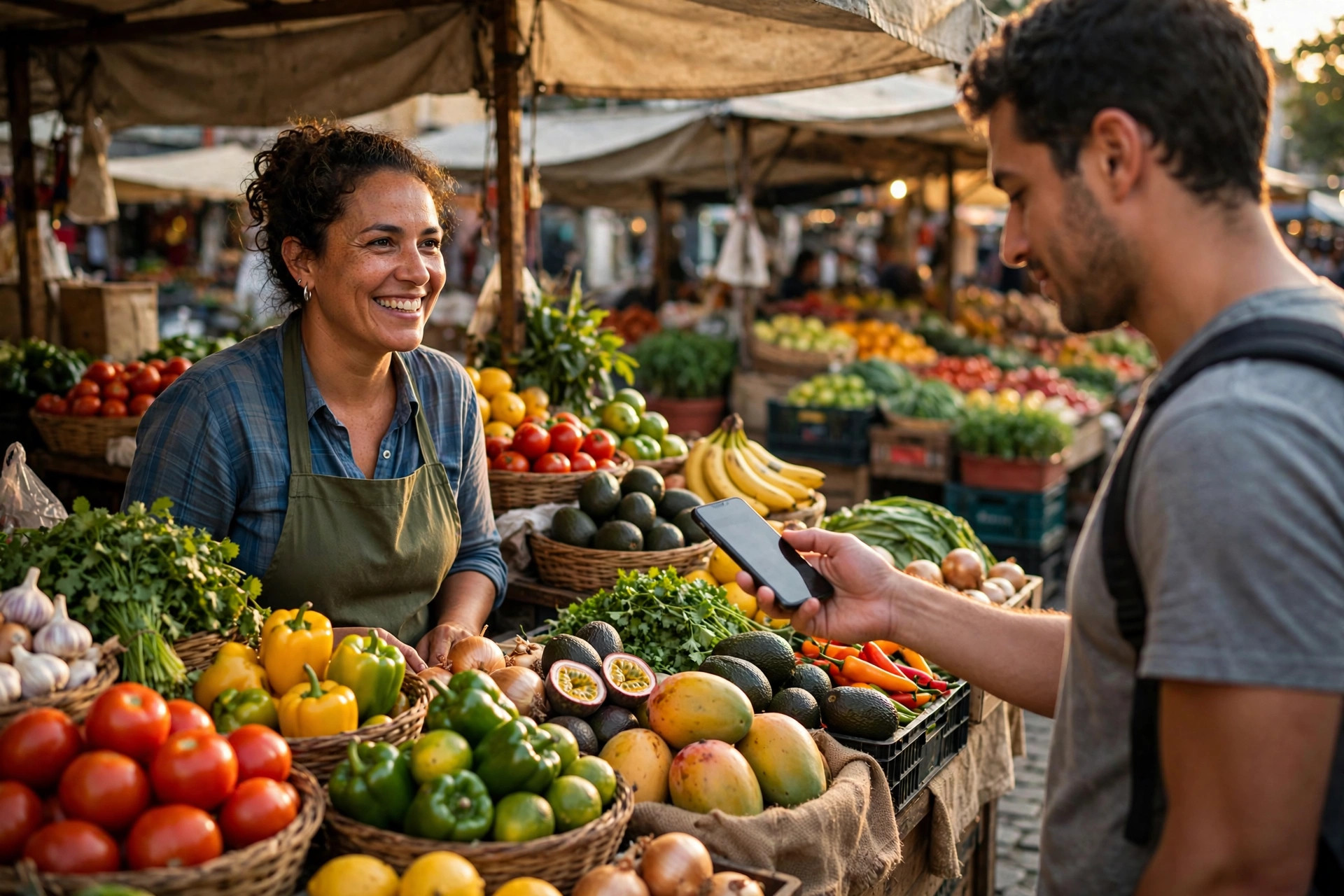
The deepest change happened at the smallest end of the economy. For the millions of Brazilians running informal businesses, market stalls, food carts, repair shops, Pix replaced the cash box, the bank transfer and the paper invoice in one move. A seller shows a QR code, the buyer pays, and both sides have a record. That record matters: a history of Pix receipts is evidence of income, which can help a small trader open an account, get credit or formalise a business. The central bank’s data shows the inclusion effect directly. The share of Brazilians paid into a bank account rose from 53 percent to 72 percent between 2021 and 2024, partly because people opened accounts specifically to use Pix. The system has also grown upmarket. The average Pix transaction reached 456 reais in the second half of 2025, higher than the average for credit, debit or prepaid cards, which means Pix is no longer just for splitting a restaurant bill. New features extended it further: contactless Pix over NFC arrived in February 2025, and Pix Automático, launched in June 2025, lets people set up subscriptions and recurring payments, opening the system to the roughly 60 million Brazilians without credit cards.
The problems that came with success
Instant and free also means instant for criminals. Pix fraud, including scams that trick people into authorising payments and the use of mule accounts, has grown with the system, and the central bank has responded with limits on transfers, tighter account controls and a mechanism for reporting fraud. The other limit is structural: Pix needs a bank account and a tax ID, so the roughly 34 million adults still outside the banking system cannot use it at all. For them, cash remains the only option. There is also a concentration risk. When one system carries half of a country’s transactions, an outage or a policy change affects everyone at once. Brazil’s answer has been to keep investing in the central infrastructure while letting banks and fintech companies compete on the experience around it. For Vietnam, where QR payments have already become the everyday default, the Pix story carries a double lesson: a public, interoperable rail can transform inclusion in a few years, but the last mile, the people without accounts, needs a different solution than the rail itself.
What this means
Pix worked because the central bank treated instant payments as infrastructure and made the rules simple: one system, open to every institution, free for people, cheap for merchants, and built into the apps everyone already used. In five years it went from a launch announcement to the way most of Brazil pays. The lesson for any country is that payment habits change fast when the new way is genuinely easier and cheaper than the old one, and that the hardest part is not the technology but the governance that keeps the rails open to all.